Weapon Retention Basics That Hold Up
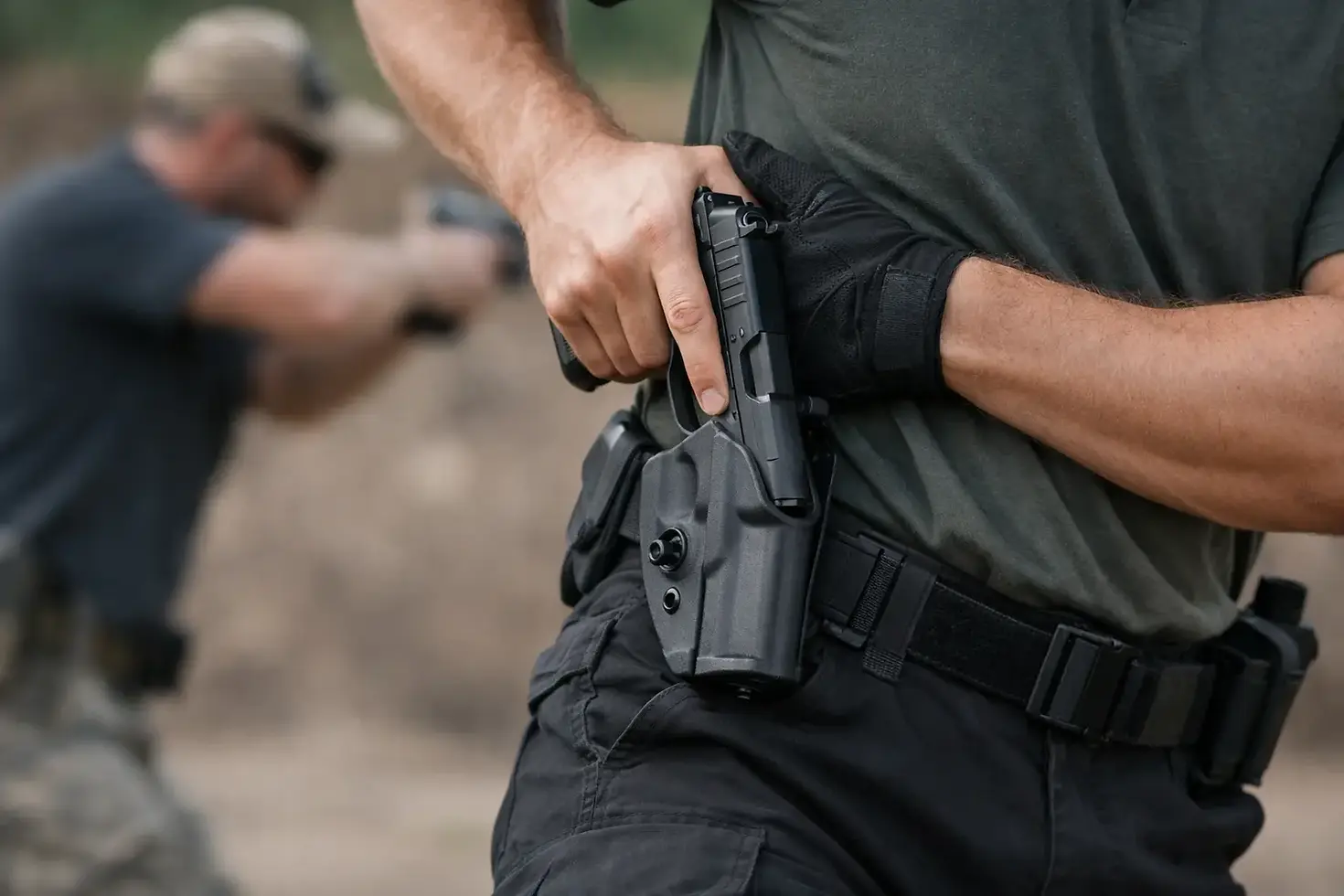
A weapon does not make you safer if you cannot keep control of it under pressure. That is the hard truth behind weapon retention basics. Whether you carry for duty, personal protection, or train in weapon-based martial arts, the first job is not drawing fast or looking sharp. The first job is making sure your tool does not become your opponent’s advantage.
This is where many people train backward. They spend time on access, presentation, and disarms, but not enough on the moment when distance collapses, grips get messy, and both people are fighting for position. Retention is not a specialty skill for advanced students. It is a foundational skill set that belongs early in training because it sits at the intersection of awareness, structure, timing, and intent.
What weapon retention basics really mean
At the beginner level, retention is simple to define and difficult to perform. It means keeping control of your weapon, your carry side, and your ability to respond while someone is trying to grab, pin, jam, or strip that weapon away. That can happen standing, clinched, against a wall, on the ground, or in the scramble before a draw is complete.
Good retention is not just about squeezing harder. Grip matters, but retention starts earlier than the hand. It starts with posture, positioning, distance, and your read of intent. If you only think about retention after someone has already clamped onto your weapon, you are already behind.
In practical self-defense training, retention has to be treated as part of the whole system. Your stance, footwork, empty-hand responses, and close-range striking all support it. The weapon is not separate from the body. If your body is out of position, your weapon is exposed.
The first layer of weapon retention basics is awareness
Most retention problems begin before contact. A person crowds your space. Their eyes lock on your waistband, pocket, or training blade. Their lead hand drifts lower than it should. Their body angle changes. Those are cues, and if you miss them, the fight gets harder fast.
Awareness is not paranoia. It is disciplined observation. You should know who is inside your reactionary gap, which side of your body is exposed, and whether your hands are free enough to frame, post, or strike. Instructors often say that advanced skill looks simple. This is one of those cases. Students who keep better awareness usually need fewer heroic saves later.
That said, awareness does not solve everything. Assaults happen fast, and determined grabs happen even when you see them coming. Awareness buys time. Training teaches you what to do with that time.
Position beats strength in a retention fight
When someone reaches for your weapon, many beginners respond by fixating on the hand. They grab at fingers, yank backward, or try to rip the weapon free through raw effort. Sometimes that works against weak pressure. Against a committed person, it often fails.
Position is the better answer. You want to turn your weapon side away, lower your center, connect your elbow to your body, and build a frame that protects the weapon line. In plain terms, you hide the weapon with your structure while disrupting the other person’s balance and base.
This is one reason Filipino Martial Arts training has real value here. Range awareness, angle management, and body alignment are built into the system. You learn that a few inches of angle change can shut down an attack line or open one. In retention, those inches matter. If your hips, shoulders, and feet are working together, your weapon is harder to access. If they are disconnected, your carry side becomes easy to isolate.
Control the person, not just the weapon
A common mistake in retention training is treating the weapon grab as a hand problem only. It is not. It is a whole-body problem. The opponent is using posture, pressure, and momentum. You should too.
If someone reaches for your weapon, you need to damage their structure while protecting your own. That may mean checking the grabbing arm, striking to create a flinch, turning the corner, clinching, posting on the head, or driving them into a surface. The exact method depends on context, but the principle stays consistent: break their ability to continue the grab while keeping your tool secured.
This is where empty-hand skill becomes non-negotiable. Under stress, there is often no clean separation between armed and unarmed fighting. You may need to pummel for inside position, frame against the neck, clear a tie-up, or hit from tight quarters before the weapon can be safely accessed or retained. Students who only train the weapon in isolation usually discover that too late.
Retention changes by weapon type and carry method
Not all weapons create the same retention problem. A holstered handgun, a training knife on the belt, an impact tool clipped in a pocket, or a stick in hand all present different vulnerabilities. The carry position changes the angle of access. The retention method changes the likely counters.
For example, a holstered tool may require strong body positioning and hand trapping before any draw is possible. A knife already in hand may create a different problem - preventing a strip while maintaining mobility and not overcommitting your grip. A longer tool like a stick can offer range, but once the opponent crashes inside, it can become harder to maneuver unless your close-range mechanics are sharp.
This is why principle-based training matters more than memorizing one favorite move. Weapon retention basics should teach universal ideas first: protect the line, control the limb, improve your angle, off-balance the attacker, and regain initiative. Specific tactics can then be applied to different tools and carry methods.
Pressure changes everything
A technique that works in cooperative drilling can fall apart when the other person is bigger, faster, and refusing to freeze. Retention is especially sensitive to this because it happens in close contact and usually under surprise. If your practice does not include pressure, resistance, and awkward positions, you are only learning the first layer.
That does not mean beginners should jump straight into chaotic sparring. It means training should progress with purpose. Start with mechanics. Add timing. Add resistance. Add verbal distraction, confined space, and fatigue. Work from standing, seated, and grounded positions. Train the moment before the grab, the grab itself, and the recovery afterward.
There is a trade-off here. More pressure builds realism, but too much too early can create sloppy habits or injuries. Good instruction solves that by scaling intensity without losing the point of the drill. The goal is not to win the round. The goal is to build reliable performance.
What beginners should focus on first
If you are new to retention work, keep your attention on a few fundamentals. First, protect your carry side with posture and elbow position. Second, learn to move your feet under pressure instead of planting and wrestling in place. Third, develop simple, repeatable empty-hand responses that help you regain control. Fourth, train your awareness so the problem is recognized before it is fully formed.
You do not need a huge catalog at the start. You need a few dependable actions that hold up when your heart rate spikes. This is where a structured curriculum helps. Random techniques can feel exciting, but progress comes faster when the training has clear stages and repeatable standards.
For students working through a Filipino Martial Arts program, retention should connect naturally to close-range striking, limb control, hubud sensitivity, and multi-weapon transitions. Those attributes are not extras. They are part of what makes retention functional under pressure.
The mindset behind retention training
Retention is not about showing how hard you can fight over an object. It is about refusing to give away control. That requires discipline more than aggression. You need enough composure to feel the pressure, read the position, and apply the right response instead of panicking and chasing the weapon with your hands.
It also requires honesty. If your carry setup is poor, if your awareness is inconsistent, or if your close-range skills are weak, retention drills will expose it. That is a good thing. Useful training should show you where your system breaks so you can strengthen it.
At Kali Sikaran International, that principle-based mindset is central to real self-defense development. You build skills that connect, not isolated tricks that only work in ideal conditions.
Weapon retention basics are not glamorous, but they are part of serious preparation. If you train with weapons in any form, make retention part of your foundation, not an afterthought. The more calmly and consistently you can protect control under pressure, the more confidence you carry into every other part of your training.


Comments