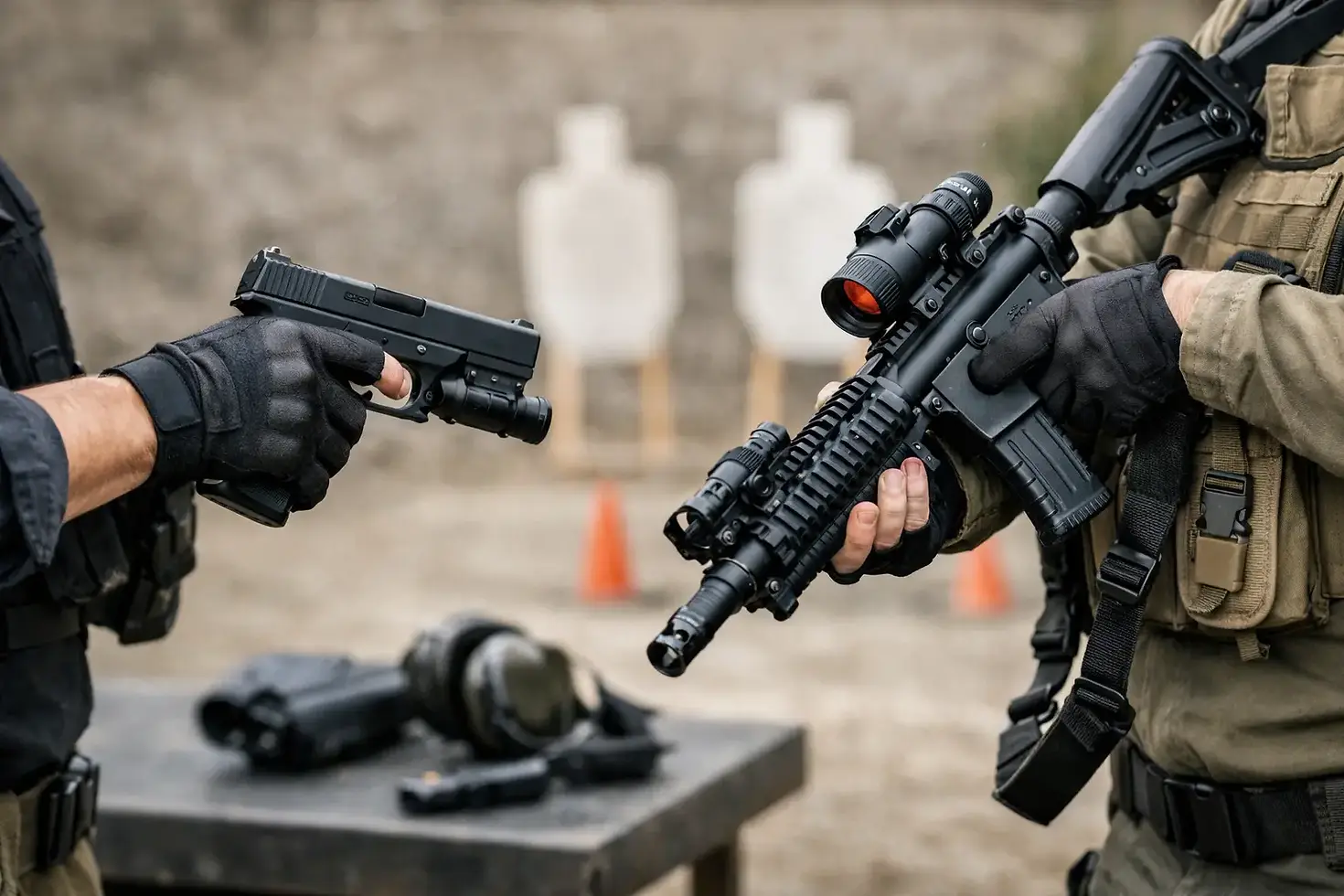
How to Train Weapon Transitions Safely
A fast handoff from stick to knife or weapon to empty hand looks sharp when it is done well. It also creates one of the easiest moments in training to lose control. If you want to train weapon transitions safely, you need more than speed. You need structure, timing, range awareness, and rules that hold up under pressure.
In Filipino Martial Arts, transitions matter because fights do not stay in one category. A weapon can be lost, trapped, broken, or inaccessible. One hand may be occupied. Distance can collapse. The student who only knows isolated weapon work often freezes when the range changes. The student who understands transitions can keep working with purpose.
That does not mean rushing into complex multi-weapon drills on day one. Safe training starts with a progression. You build clean mechanics first, then pressure-test them with control. That approach develops real capability without turning the training floor into a hazard.
Why weapon transitions create risk
Most training injuries during transitions do not come from advanced intent. They come from simple breakdowns. A student reaches across the body without clearing space. A partner steps in early. The new weapon is drawn before the old one is fully controlled. Eyes drop to the hand instead of staying on the opponent.
Transitions increase cognitive load. You are changing grip, tool, and tactical response while managing distance and timing. Under stress, people default to what is familiar. If the transition has not been trained methodically, the body tends to rush. That is where sloppiness appears.
There is also a false confidence problem. Many people can perform a weapon switch in the air. That does not mean they can do it safely against movement, contact, and resistance. Good training closes the gap between demonstration and application.
How to train weapon transitions safely from the start
The safest way to begin is to remove speed from the equation. Slow work exposes the details that fast work hides. Before any live partner drill, the student should be able to perform the transition cleanly in solo practice, with the correct body position, line of movement, and recovery posture.
Start with one defined transition at a time. That might be stick to empty hand, knife to empty hand, or stick to knife depending on the curriculum and training tools available. Keep the task narrow. One trigger, one response, one finishing position. When students try to learn too many options at once, they usually end up memorizing chaos instead of building skill.
Training tools matter. Use dedicated trainers appropriate to the level of the drill. Padded sticks, training knives, and clearly differentiated tools help students recognize what they are handling and reduce unnecessary risk. Live blades and improvised training shortcuts have no place in partner transition drills.
Just as important, define the end point of each movement. A transition is not complete when the new weapon appears. It is complete when the student has regained structure, addressed the line of attack, and can continue with control. That mindset prevents flashy but tactically weak movement.
Build around position before speed
A strong transition begins with body alignment. If your feet are crossed, posture is broken, or your live hand is hanging, the weapon exchange is already compromised. Students should learn to move the body first so the hand change happens inside a stable base.
That often means using simple positional checkpoints. Is the head protected? Is the non-weapon hand active? Is the draw path clear? Is the original weapon retained, dropped by plan, or transferred with purpose? These are not minor details. They are the difference between functional training and reckless movement.
Make the partner's role clear
A lot of bad transition training comes from vague partner behavior. One person is trying to practice a clean sequence while the other feeds inconsistent energy. That creates confusion, and confusion creates unsafe reactions.
Give the feeder a precise job. Feed a known angle. Hold a known range. Apply known pressure. Then build from there. Once both people understand the task, you can gradually increase realism without losing discipline.
Progression beats intensity
If you want students to become competent, give them levels. Safe training is not soft training. It is organized training.
The first phase is isolated mechanics. This is solo work or very light cooperative partner work where the student learns where the weapon is, how the hand moves, and what the body should do. There is no need for speed here.
The second phase is structured insertion. The transition gets placed into a simple drill with one attack pattern and one tactical answer. This teaches recognition. The student is no longer switching tools at random. The transition now belongs to a problem.
The third phase is variable pressure. Range changes, timing shifts, and the partner becomes less cooperative. The options are still limited, but the student must make decisions and maintain control. This is where many people discover that their smooth solo transition falls apart when the opponent moves.
The fourth phase is integrated sparring or scenario work using appropriate safety gear and strict boundaries. At this point, the transition is part of a larger system. It must work alongside footwork, striking, checking, off-balancing, and disengagement.
This layered approach is one of the strongest ways to train weapon transitions safely because it gives students clear standards. They earn speed and complexity. They do not assume it.
Common errors that need correction early
The first common error is reaching before creating space. If the opponent is still in a position to hit, clinch, or trap, the transition may be tactically wrong even if it looks technically clean. Students need to learn that access comes from positional advantage, not wishful thinking.
The second is visual fixation. Many students look down at the draw or hand transfer. That habit breaks awareness and usually slows the movement anyway. A better standard is to keep visual attention on the opponent while building enough repetition that the hands can work with minimal checking.
The third is carrying too much tension. Over-gripping the initial weapon, muscling the draw, and forcing the sequence all reduce control. Efficient transitions are direct, not frantic.
The fourth is ignoring the non-dominant hand. In real application, the live hand helps monitor, shield, check, trap, or create the lane for the transition. Students who treat it as decorative will struggle under pressure.
When realism helps and when it hurts
Realism is a good goal, but it needs timing. Too much realism too early turns training into noise. Students start improvising before they understand the structure. That is not advanced training. That is premature pressure.
At the same time, staying too cooperative for too long creates false confidence. There has to be a point where the partner disrupts the transition, changes the range, or forces a backup answer. Otherwise, the student never learns whether the skill holds up.
The balance is simple. First build reliability, then test adaptability. In a program-led environment like Kali Sikaran International, that balance is easier to maintain because students can follow defined progressions rather than guessing what hard training is supposed to look like.
Safety standards for instructors and training partners
If you are leading a class, set the rules before the drill starts. Students should know the target speed, legal targets, level of contact, start cue, stop cue, and what counts as a reset. Do not assume they know. Verbal clarity prevents avoidable mistakes.
Equipment checks should be routine. Training knives should be obvious and secure. Sticks should match the drill. Protective gear should fit and allow movement. The room should have enough space for each pair to work without crowding. Good safety culture is not dramatic. It is consistent.
Partners also need permission to slow the drill down. A disciplined training floor is one where students can say, "Reset" or "Again, slower" without ego getting involved. That is not weakness. That is professionalism.
For instructors, one more point matters. Do not praise speed when the structure is poor. Students repeat what gets rewarded. If you celebrate flashy transitions that compromise posture, awareness, or control, the room will drift toward performance instead of function.
What good transition training should produce
Done properly, transition work builds more than technical variety. It builds composure. The student learns how to keep solving the problem when the tool changes, the range collapses, or the first plan fails.
That is the real standard. Not whether a drill looks advanced, but whether it produces usable responses under stress. A good transition should help the student maintain initiative, protect vulnerable lines, and continue fighting with intent.
It should also connect back to the wider system. Stick, knife, and empty hand are not separate islands. In strong Filipino Martial Arts training, they reinforce each other. The mechanics, timing, and tactical ideas carry across ranges when they are taught with discipline.
If you want your transition training to serve self-defense instead of just choreography, keep the goal clear. Move with structure. Progress with purpose. Pressure-test at the right time. Skill grows faster when control leads the process.


Comments