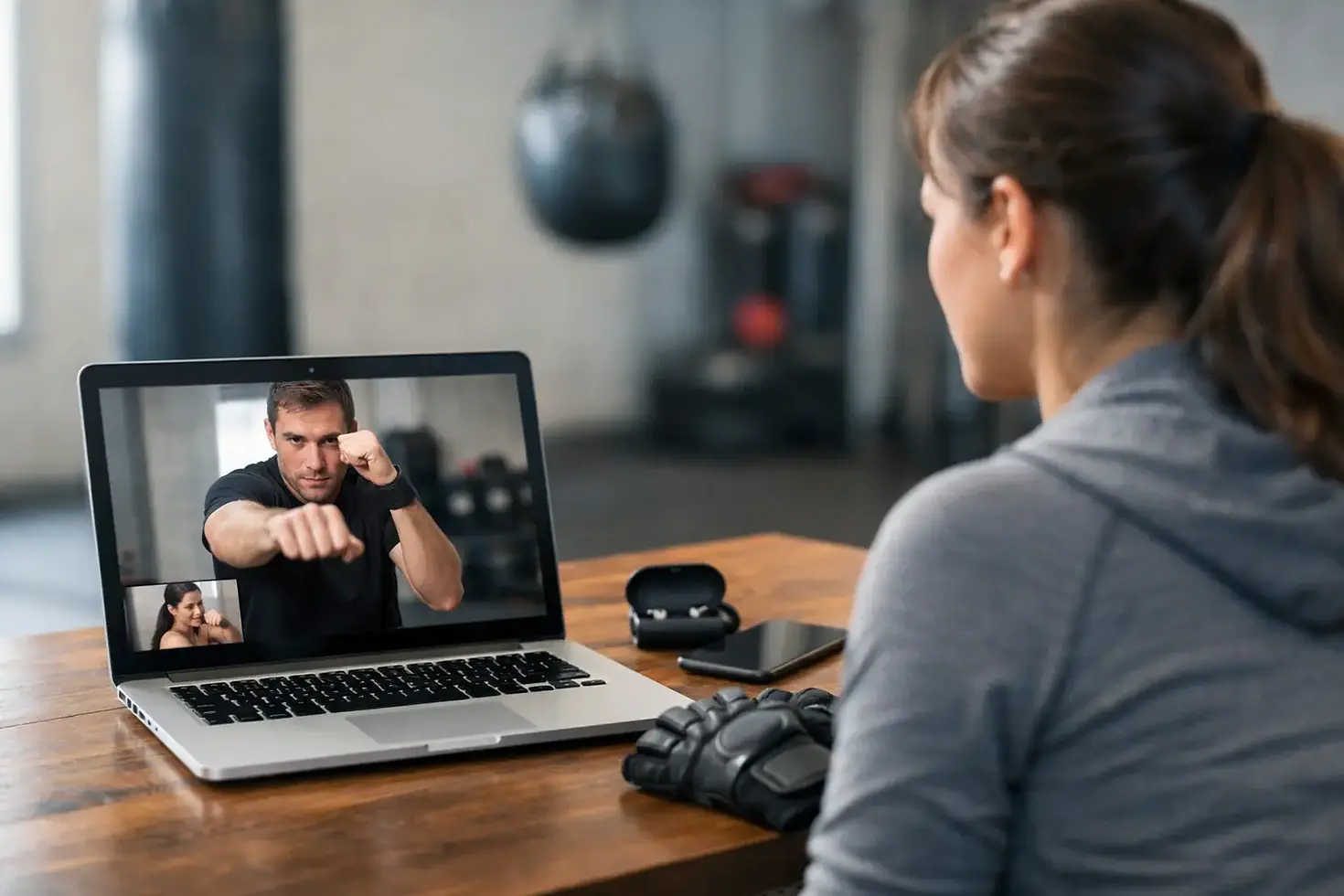
Digital Coaching for Self Defense That Works
A lot of people do not need more motivation. They need a training method they can actually stick with. That is where digital coaching for self defense earns its place. When it is built correctly, it gives you structure, feedback, and real progression without forcing your schedule to revolve around a fixed class time.
For adults balancing work, family, travel, and limited local options, that matters. But convenience by itself is not enough. Self-defense training only has value if it builds usable skill under pressure. The real question is not whether online coaching is possible. The real question is whether it is organized in a way that develops timing, judgment, movement, and confidence that hold up when things get messy.
What digital coaching for self defense should actually deliver
Good digital coaching is not a video library with a better sales page. It is a system. It should show you what to train, how to train it, when to progress, and how to correct mistakes before they become habits.
That starts with clear sequencing. Beginners need a reliable entry point, not random techniques pulled from different ranges and weapons. A strong program builds from stance, movement, body mechanics, and defensive awareness into partner work, impact training, and pressure-based application. More experienced students need the same thing at a higher level - sharper detail, better timing, and a way to measure whether their performance is improving.
In self-defense, that structure matters because skill is layered. You do not become harder to hurt because you watched more content. You improve because your movement gets cleaner, your reactions get more efficient, and your decisions under stress get more disciplined.
Why online self-defense coaching works for the right student
The biggest advantage of digital coaching is consistency. A student who can train three or four times a week at home, even in shorter sessions, will often outperform someone who attends one class a week with no follow-up. Repetition matters. So does access.
With online coaching, you can revisit material, slow it down, and train at the pace needed to build precision. That is especially useful in Filipino Martial Arts, where weapon orientation, hand positioning, angles, and footwork all require close attention. On-demand instruction also makes it easier to separate learning from memorizing. You can repeat a sequence until the mechanics become stable, then pressure test it in live sessions or partner drills.
There is also a practical benefit for students who do not live near serious instruction. A lot of people want functional training but only have access to cardio kickboxing, point-based systems, or schools that avoid realistic self-defense context. Digital delivery closes that gap if the coaching remains disciplined and progression-based.
Where digital coaching for self defense can fall short
There are trade-offs. Anyone claiming otherwise is selling fantasy.
Self-defense is physical. Distance, timing, balance disruption, contact tolerance, and emotional control under pressure all have to be trained, not just understood. You cannot fully build those attributes by watching and shadowing alone. If a program does not address partner drills, impact work, live correction, and progressive resistance, it will eventually hit a ceiling.
That does not mean digital coaching is weak. It means the design has to be honest. The best programs account for the limits of solo practice and tell students how to bridge them. Sometimes that means guided partner work with a spouse or training partner. Sometimes it means private coaching, live online sessions, workshops, or periodic in-person events. It depends on the student, the material, and the training goal.
If your goal is awareness, movement, defensive basics, and foundational combative skills, digital coaching can take you far. If your goal is advanced application under chaotic pressure, you will need some form of resistance training and real-time feedback. Serious coaching says that plainly.
The difference between content and coaching
This is where many people waste time. They buy access to hundreds of videos and assume volume equals progress. It does not.
Content gives information. Coaching gives direction. A coach helps you prioritize the right material, avoid common errors, and understand what "better" looks like. That matters in self-defense because small details change outcomes. A bad angle on a stick strike, poor hand positioning in a knife defense drill, or unstable footwork during entry can leave you exposed.
A real coaching model should include progression standards. You should know what you are expected to perform at each stage. That may include movement patterns, defensive responses, striking lines, partner sensitivity drills like hubud, timing exercises like sumbrada, and transitions between weapon and empty-hand ranges. The point is not to collect techniques. The point is to build a dependable base that can be tested and improved.
Kali Sikaran International reflects this well because the training ecosystem is built around structured development rather than random access. That is the standard students should look for.
What to look for in a serious digital program
Start with curriculum design. Does the training move from basic to advanced in a logical order? Can a beginner step in without feeling lost? Can an experienced student identify where to plug in and where to refine?
Next, look for technical scope with practical discipline. Self-defense is not one range. A strong program should account for empty hands, weapons, close-quarter flow, striking mechanics, defensive movement, and transition skills. That does not mean teaching everything at once. It means building a complete framework over time.
Feedback is another major factor. Some students can make strong progress with detailed instruction and self-review. Most improve faster when they can submit footage, join live sessions, or work with a coach who can correct posture, alignment, rhythm, and tactical choices. If there is no path for correction, there is a higher risk of rehearsing mistakes.
Finally, look for measurable standards. Belt systems, level benchmarks, skill assessments, or clear training goals all help keep the process honest. Self-defense should build confidence, but confidence needs evidence behind it.
Training at home without training unrealistically
The strongest home training has intent behind it. You are not just filling time. You are building attributes.
A useful week of digital self-defense training might include movement and striking mechanics, a technical lesson focused on one range, a review session to sharpen details, and one pressure-oriented session using a bag, pads, or controlled partner drills. That balance helps keep technique alive while developing physical expression.
Students also need to respect context. A clean drill is not the same as a real exchange. Drills teach patterns, timing, and recognition. They are essential, but they are not the final stage. The right digital coach will help you understand where a drill fits in the larger process so you do not confuse cooperation with capability.
This is especially important in weapon-based systems. Training with sticks and knives can dramatically improve coordination, awareness, line familiarization, and hand discipline. It can also become performative if it is disconnected from intent and application. Functional coaching keeps the training honest by tying mechanics back to self-protection, range management, and decision-making.
Who benefits most from digital coaching
Adults with demanding schedules often get the most value because they can train consistently instead of waiting for the perfect time. Beginners benefit when the system is clear and the instruction removes guesswork. Experienced martial artists benefit when they want to add a principle-based weapons and self-defense framework without starting from scratch in a random local class.
Instructors and club leaders can benefit as well, especially if they want a structured curriculum, progression standards, and a broader technical base. But the same rule applies to everyone - the format only works if the training is disciplined.
There is also a mindset piece. Students who make the best progress through digital coaching are usually self-directed enough to practice regularly but disciplined enough to accept correction. They do not treat convenience as an excuse to train casually. They use convenience to train more often and with more focus.
The real standard is progress you can feel and measure
Self-defense training should make you more capable, not just more interested. You should move with better balance, recognize lines of attack more clearly, hit with better mechanics, and respond with less hesitation. You should also be able to see where your gaps are. That is part of serious training.
Digital coaching for self defense is not a shortcut. It is a delivery model. In the hands of a strong organization, it can be direct, demanding, and highly effective. In the hands of a weak one, it becomes entertainment dressed up as instruction.
Choose the model that asks something of you. Choose the one that gives you a path, not just access. Then train with the kind of consistency that turns confidence from an idea into evidence.


Comments